Home » The School

The School

Programme and calendar

Programme and calendar - Ayurveda Monaci Erranti
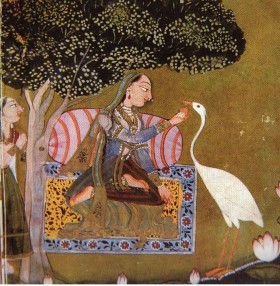
The wild goose , hamsa, symbolises the freed spirit, and its name, repeated until it becomes so’ham, is the breathing mantra and indicates union with the Absolute.


The beginning

I knew immediately, as soon as I had met him, that his method of massaging was the way, the path, the vehicle for telling us something else, for allowing us to feel, to allow us to come face to face with not just muscle, money, work, family, toilet time and sleep, but something more, much more…I felt that his whole work was a mission: “to make us feel, to make us come face to face with our soul”.
Time and again, people who met S.V. Govindan, even when he didn’t say anything, were deeply moved... they would often say: “he has the hands of a saint, his hands are holy!”.
Ayurveda, just like yoga, was and often is still today a subject to be studied, with discussions to be had, tricks to show to your friends when you come back from your holidays.
Living close to him changed my life, my responsiveness when meeting another human being, and my hands. I would study all day and sometimes during the night, I would practise, I would follow him and they, my hands, began to feel, to massage, to “see” and to give. Sometimes the “results” would appear to be miracles.
I began to follow him everywhere, and he would take me everywhere. He never let me work with him, I could not have the honour of being his assistant, apart from the final exam that I gave, me, with him sitting before us, while I was teaching the group that had followed his last lessons. In India.
At that precise moment I was teaching, in his presence, the basics of the massage that he had taught me.
During these final meetings, I brought the book that I was writing to show him so that I could ask him in person for permission to add photographs of him and translate the things I had written for him. And that’s not all.
We talked a lot, about Him, about the Ashram that Saint Vinoba wanted, about Gandhi and about the many contacts he had around the world. I asked him exactly what was so special about the Ayurvedic massage that he had taught me and promoted all over the world, what complements this massage and what makes it different, so different compared to the massage offered in hospitals in India and taught in schools in Europe and the West.
He told me everything.
That was the moment when the ascetic, the yoghi, the meditation, Ayurveda, the Lord, the Temple, He as temple, joined for a brief second in neither time nor space.
He explained it to me succinctly and I understood.
Without medicated oils, which are so important in Indian medicine, without hospitals or qualified masseurs, without food carefully prescribed depending on the person’s build, without the myriad coloured pills nor the many kashayas (medicinal infusions and teas), without two hours of yoga a day...
I understood exactly the quality and ancient knowledge that comes from the union and from the thought that we are not two but one, forever.
There, or rather here, it is, the mantra: “ So Ham so ham. S o ham..sa.”
All this art, stemming from over thousands of years, from the whole lives of so many ascetics without home or money, wandering, reached me through Him, Govandanji, who in his turn received it from Kelappan, who received it in his turn from another and so on right up to “The One”, the only “Him”.
Indian tradition had developed a very “powerful” form of massage, practised by those who, possessing nothing, wandered the world trying to bring relief to the body and soul of so many people in need.
This was where the concept of Ayurvedic massage as understood by the Wandering Monks came from; next to the room where he then left his body, just a few months later. Wandering Monk because he was always a sanyasi, he who has no house, no possessions, and "Wandering Monk" is the translation of Sanyasi.
Of course a sincere attitude, strong body and quick mind are needed, and a soul that yearns.
This Ayurveda course comes from a pupil that has followed the Master and the real tradition and who wants to promote and teach the precious art of Ayurvedic massage that is disappearing and that risks being lost forever.
We won’t talk much, very little in fact, about vata, pitta and kapha, we won’t talk about oils and special beds, we won’t talk about doctors and medicines: you will learn something different, with trust, time and humility.
You won’t have a minute-by-minute programme, because lessons will always be adapted to the class, so that we can offer everything possible depending on individual cases. But you can rest assured that it will all be brought to a conclusion!
It will often be wonderful to be together, but also difficult sometimes: it is not an easy course and you must always remember this and be aware of it.
And so in this way together we can discover something new, something that you will take with you for the rest of your life.
Perhaps it will be of assistance to yourselves or your friends and family, or something more…a social and moral responsibility in your life, or perhaps it will take you on a journey to...?
I’m sure that sooner or later we will be able to talk about it together…
Alida Dal Degan
Chair of the Italian Ayurveda Wandering Monks Association – teacher of the ancient art of Ayurvedic massage on the staff of Sree Sankara Ayurvedic Hospitals – Kerala – India
 
Characteristics
 
Before presenting the programme's contents and structure, we would like to tell you more about what makes this school different and unique for its methods, its themes and its teaching locations, for its teacher/student relationship and for the special attention paid to training people in their entirety.
First of all we must specify that the treatments taught are in no way medical (physiotherapeutic, rehabilitative or anything else) but, as we mentioned in the introduction their aim is to perpetuate a traditional practice targeted at the individual's wellbeing.
As you will see when we take a closer look at the programme, the aspects that relate most closely to Ayurvedic medicine, for those who are interested, will be exhaustively dealt with in collaboration with one of the most prestigious Indian groups of Ayurvedic clinics.
This school offers instruction based on the Indian tradition where knowledge is communicated directly from the master to the student in strict observance of the tradition itself.
Alida Dal Degan, guardian of the ideas learnt from the Master S.V.Govindan, who in his turn was a disciple of Sri Kelappan, known as “Gandhi” of Kerala, offers herself as an intermediary to make this teaching unique because it is alive. Students won’t learn a technique but a way of behaving that is a complex combination of things: it does in fact comprise technique, but it also comprises all those subtle qualities of being, in terms of union of body, mind and soul, following the basic texts of Ayurveda. The result of this teaching turns a "student" into a pupil who may aspire to become a "disciple".
 
The teaching staff includes Prof. Stefano Piano, a renowned Indologist and honorary chair of the association. Prof. Piano will provide insight into the thought of ancient Brahman, an indispensable tool to contextualise the elements of the practice of Ayurveda, yoga and the whole tradition.
 
Another of the school’s distinguishing features is that students can follow introductory courses that have a dual purpose: they allow the student to ascertain their attitude to the teaching offered before undertaking a more in-depth course and they are also a way of promoting the tradition itself.
 
The location. The importance of continuity also affects where the courses take place. The school has decided to make its courses residential, therefore a physical space is created  that is shared and where nearness to others can be experienced.
 
The number of students for each course is limited. A small group means personalised teaching can be offered.
 
Complementary and indispensable is the teaching of yoga, concentration and relaxation techniques, to enable each student to have better instruments at their disposal that they can use on themselves.
 
 
The school’s structure
 
Teaching takes place at eight residential meetings over a time period of twenty-two months (see the calendar) for a total of 470 teaching hours. The first two meetings, which we call "monk elements 1 (Viloma)” and “monk elements 2 (Anuloma)”, may be taken by registering for each one, and a participation certificate will be issued.
For those who do not intend to continue with the training, these meetings are an excellent opportunity to learn more about the fundamental principles of the course, both from a practical and theoretical point of view; they will also provide the basic knowledge needed to perform massage at an amateur level observing the tradition that is taught.
For those who intend to continue with the course, the school will verify that the candidate is in possession of the attitudes necessary to approach this art.
Taken into consideration will be the candidate’s disposition to others, personal hygiene, humanitarian attitude, understanding of the fundamental principles of professional ethics, good coordination, attitude to study and physical stamina.
The subsequent six meetings make up the school’s two-year period. Three meetings will be held a year and registration is required for a period of a whole year. At the end of the two years there is a final exam. Students who pass this exam will receive a diploma that testifies to their ability to perform "Ayurvedic massage according to the tradition of the wandering monks". There is also an exam at the end of the first year for which no certificate will be issued if the student does not pass.
 
Also included in the syllabus are:
Indian Culture, taught by Prof. Stefano Piano
Anatomy and Physiology, taught by Alessandra Palumbo
Elements of Behavioural Psychology and Relaxation Techniques, taught by Dr. Luigi Negro
 
 
After the two “elements” courses and after the first year there is the option of travelling to India for two weeks in the company of the teacher to spend time at one of the clinics in the Sree Sankara Ayurvedic Hospitals group as patients. There you will receive treatments and learn the methods, the mechanisms and the practice of Ayurveda. At the same time, with the help of the teacher, you will learn the differences between what is practised in Indian Ayurvedic hospitals and what is taught in the Wandering Monks massage course. The clinic that will be visited is where master S.V. Govindan spent the final years of his life, and you will have the opportunity to appreciate and learn even more about the art of massage as handed down by the Master.
 
At the end of the two-year course there is then the option of following a two-month masters course, which may be split into two one-month courses, at one or more of the clinics in the Sree Sankara Ayurvedic Hospitals group in India. The aim of this masters course is to get practical personal training at the clinic, to tackle the themes relating to Ayurvedic medicine, and to learn how massage treatments are performed in Indian Ayurvedic hospitals. The teachers are part of the clinic’s medical and teaching staff. At the end of the masters an exam will be taken and a joint diploma from the Sree Sankara Ayurvedic Hospitals and the Italian Ayurveda Wandering Monks Association will be issued.
All holders of a diploma from the Italian Ayurveda Wandering Monks Association will be part of a register specially established and published on the website. In order to continue to appear on the register, diploma holders must take part in a two-yearly meeting of 30 hours which will verify and confirm that the wandering monks massage is being performed correctly and that the holder’s spiritual, ethical and humanitarian attitude is unchanged.
Specialisation seminars.
Every year you will be able to take part in a specialisation workshops on themes linked to the training you have received. The workshop will deal with topics that are featured on this site, as well as new ones.
The six-monthly dates of these workshops will be published on the courses page of this website, as well as the level of training required to take part in each course. At the end of each specialisation course a certificate will be issued.
 
Note.
The school believes that it is essential that students who intend to embark on the two-year course receive wandering monks massage treatments from people with proven experience in the field in line with students’ individual needs. This experience is necessary for students to better understand what the teaching involves: how can you know if you want to learn this art if you do not know what it is?
The school can provide contacts in various cities.